
Learn to recognize a phishing email
Don't Read the Message First—Read the Sender First
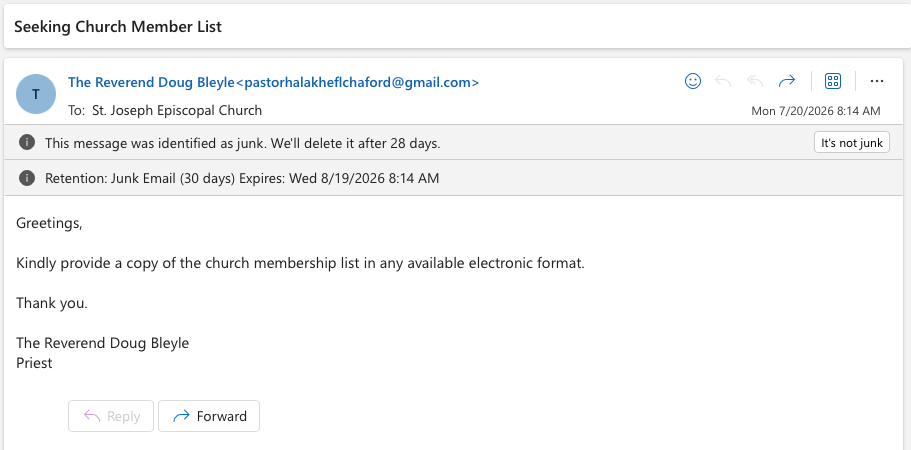
This is an example of scam emails pretending to be from Fr. Doug. We get emails like this on a daily basis!
At first glance it looks convincing. The display name says "The Reverend Doug Bleyle." But that's exactly what scammers hope you'll notice first.
Before you read a single word of the email, always look at the sender's actual email address.
In this example, the email came from:
pastorhalakheflchaford@gmail.com
That clearly isn't Fr. Doug's email address.
Scammers know they can make a name appear legitimate.
Then Ask Yourself…
Once you've checked the sender, read the message and ask:
"Does this even make sense?"
This email asks me (Cherlyn) to send an electronic copy of our parish directory.
Anyone who knows our parish knows that request doesn't make sense.
Fr. Doug knows I don't distribute electronic copies of our parish directory. If he needed something from me, he'd simply ask in person, call me, or use his normal email.
Our Size Is Our Strength
One of the best defenses against scams is simply knowing one another.
If you ever receive an unexpected email, text, or phone call that seems unusual, don't respond immediately.
Instead:
Check the sender's email address.
Ask yourself whether the request makes sense.
If you're unsure, call the person directly using the phone number you already have. Never call a number listed in a questionable email! Never click on a link in a questionable email!
A scammer counts on you acting before you think.
Take ten seconds.
Those ten seconds can save you from becoming the next victim.
P.S. Fr. Doug would never sign his emails as:
“The Reverend Doug Bleyle
Priest”